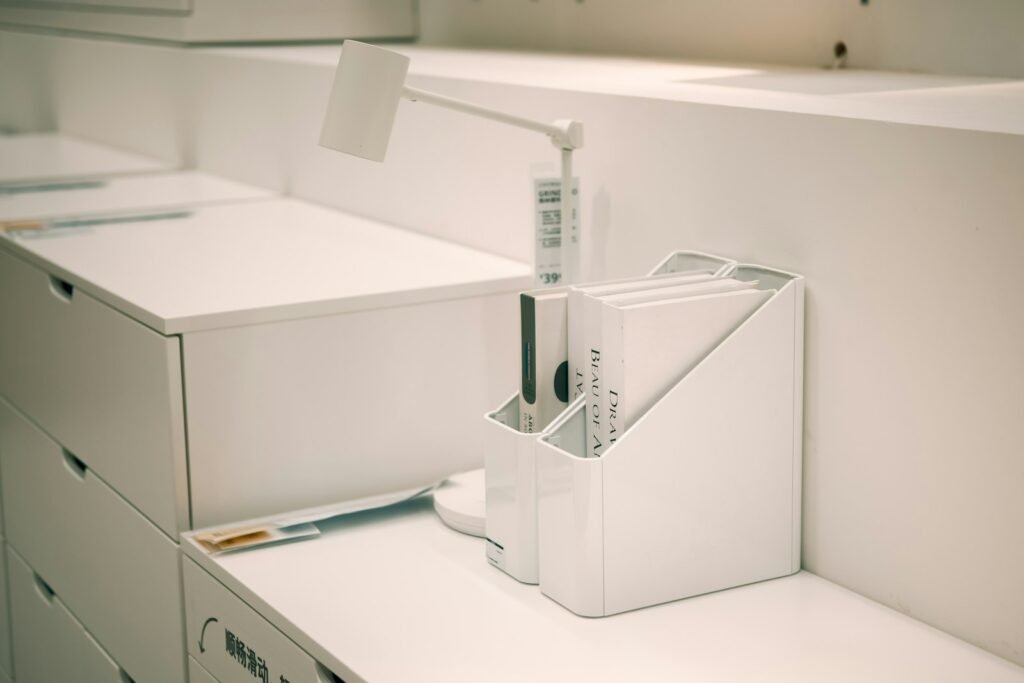
A cluttered desk rarely has one cause — it’s usually a mix of loose pens, unfiled paperwork, small items with no fixed home, and cables that never seem to sit still. This guide brings together everything on SetupLab about desktop organization: product roundups, buying guides, step-by-step setup instructions, troubleshooting, and head-to-head comparisons, organized by the specific type of clutter you’re dealing with.
Why Desktop Organization Matters in a Home Office
An organized desk isn’t just about appearance — it directly affects how quickly you can find what you need, whether that’s a working pen, a document you filed last week, or a specific cable behind your monitor. A deliberate setup, built from a handful of inexpensive products matched to your actual clutter categories, removes the daily friction of searching and re-sorting.
How to Approach Desktop Organization
Rather than buying one product and hoping it solves everything, effective desktop organization usually layers a few tools matched to specific categories: a desk organizer or pen holder for daily-use items kept visible, a paper tray system for documents moving through stages, drawer dividers or a drawer organizer for small items kept out of sight, and storage baskets for anything that doesn’t fit a drawer at all. Start with whichever category is causing the most visible clutter right now.
Best X Roundups: Compare Top-Rated Products
Full product comparisons with real pricing, ratings, and pros/cons for each desktop organization category:
- Best Desk Organizers
- Best Stackable Paper Trays
- Best Pen Holders
- Best Drawer Organizers
- Best Drawer Dividers
- Best Storage Baskets
- Best Desktop Cable Organizers
- Best Sticky Note Holders
Buying Guides
Shorter, focused guides on exactly what to check before buying, with our top recommendations:
- Drawer Dividers Buying Guide
- Storage Baskets Buying Guide
- Desktop Cable Organizers Buying Guide
- Sticky Note Holders Buying Guide
How-To Guides: Step-by-Step Setup
Full setup walkthroughs for each product category, from sorting your current clutter to final placement:
- How to Choose and Set Up Desk Organizers
- How to Choose and Set Up Stackable Paper Trays
- How to Choose and Set Up Pen Holders
- How to Choose and Set Up Drawer Organizers
- How to Choose and Set Up Drawer Dividers
- How to Choose and Set Up Storage Baskets
- How to Choose and Set Up Desktop Cable Organizers
- How to Choose and Set Up Sticky Note Holders
New to Desktop Organization? Start Here
Plain-language explainers if you’re not sure what a product actually is or does:
- What Is a Desk Organizer?
- What Are Stackable Paper Trays?
- What Is a Pen Holder?
- What Is a Drawer Organizer?
Troubleshooting Common Problems
Already have a setup that isn’t working right? Start with these fixes:
- Desk Organizers Not Working? Common Problems and Fixes
- Stackable Paper Trays Not Working? Common Problems and Fixes
Head-to-Head Comparisons
Not sure which product actually solves your specific problem? These comparisons break it down:
- Desk Organizers vs Stackable Paper Trays
- Pen Holders vs Drawer Organizers
- Drawer Dividers vs Storage Baskets
Common Mistakes to Avoid
- Buying one organizer and expecting it to handle every category of clutter — most desks need 2-3 different tools working together
- Dividing a drawer or filling an organizer before sorting your actual items into categories first
- Letting any organizer, tray, or basket become a general catch-all instead of holding one specific category
- Skipping a recurring schedule for emptying paper trays or clearing outdated sticky notes, which is what actually keeps a system working long-term
Frequently Asked Questions
Where should I start if my whole desk is a mess?
Start with whichever category is causing the most visible clutter — loose pens and small items (a desk organizer or pen holder), unfiled paperwork (paper trays), or messy cables (a cable organizer) — then add the others as needed.
Do I need every product in this cluster?
No — most home offices only need 2-3 of these tools together. Read the buying guides and comparisons above to figure out which specific problems you actually have.
How much should a full desktop organization setup cost?
A basic setup covering a desk organizer, pen holder, and some drawer dividers can cost under $70 total; a more complete setup adding paper trays and storage baskets typically runs $100-150.
How long does a full desktop organization overhaul take?
Most desks can be fully sorted and organized in an hour or two, assuming products are already on hand — the sorting step takes longer than the actual setup.
Conclusion
Desktop organization in a home office is rarely a single-product fix — it’s a handful of inexpensive tools matched to the specific type of clutter you actually have. Use the roundups above to pick products, the how-to guides to set them up correctly, and the troubleshooting pieces if something isn’t holding up the way it should.