Quick Answer
A magnetic board is a wall-mounted or surface-adhered board with a metal backing that holds magnets, usually combined with a dry-erase writing surface — letting you both write on it and post documents held in place with magnets.
How It Works
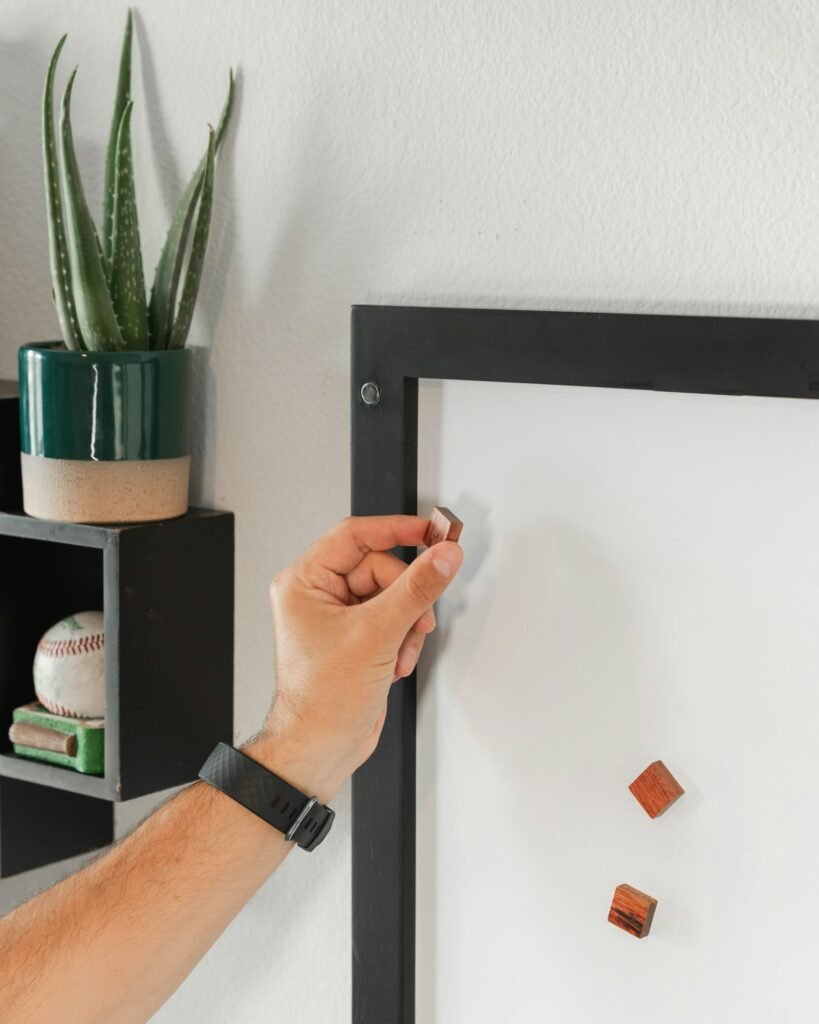
The board’s steel or metal-backed surface lets magnets grip and hold items — papers, notes, small tools — directly on the face of the board, while the same surface typically also functions as a standard dry-erase whiteboard for writing. Magnets vary in strength, and thicker or heavier items need stronger magnets to stay attached reliably, especially on boards with a thinner metal backing. Because the board serves two functions, keeping writing and magnet-held items in separate zones is what keeps it legible rather than cluttered.
Benefits
- Combines writing and document-holding in a single board
- Magnets allow quick attachment and removal without pins or tape
- Works for items too heavy or awkward for simple push pins
- Some formats (flexible sheets) apply to any existing metal surface without new mounting hardware
Types of Magnetic Boards
Wall-mounted rigid magnetic whiteboards are the most common, combining a steel-backed writing surface in a framed unit. Flexible magnetic dry-erase sheets stick to any existing metal surface — like a filing cabinet — without needing separate mounting hardware. Magnetic-only boards (without a dry-erase coating) exist too, focused purely on holding items rather than writing.
Who Needs This?
Anyone who wants both a writing surface and a way to display or hold physical items in one spot benefits from a magnetic board, especially if a corkboard’s pin-only approach or a plain whiteboard’s writing-only function doesn’t cover everything they need.
Magnetic Boards vs. Wall Calendars
A magnetic board is a blank, reusable surface for writing and posting items, with no built-in date structure. A wall calendar is purpose-built with a pre-printed monthly date grid, ready to use immediately without any setup — the two solve different needs and are often used side by side.
Frequently Asked Questions
Why do my magnets keep sliding off the board?
This usually means the magnets aren’t strong enough for the board’s magnetic backing — switching to stronger rare-earth magnets often solves it without needing a different board.
Can I use a magnetic sheet instead of a mounted board?
Yes — a flexible magnetic dry-erase sheet can stick to any existing metal surface like a filing cabinet, avoiding the need for wall mounting hardware entirely.
How do I stop dry-erase ghosting on a magnetic board?
The same fix as any whiteboard — erase writing within a few days rather than letting it sit, and use isopropyl alcohol on a microfiber cloth for stubborn marks.
Can a magnetic board hold both writing and papers at once?
Yes, most magnetic dry-erase boards support both — just keep writing and magnet-held items in separate zones so the board stays legible.
Are all whiteboards magnetic?
No — check the specific product listing, since some basic melamine whiteboards have no magnetic backing at all and won’t hold magnets regardless of their strength.
What magnets work best on a home office board?
Stronger rare-earth (neodymium) magnets hold more reliably than basic ceramic magnets, especially for anything thicker than a single sheet of paper.
Next Steps
Ready to buy one? See our Best Magnetic Boards picks for a full comparison of top-rated options.