Quick Answer
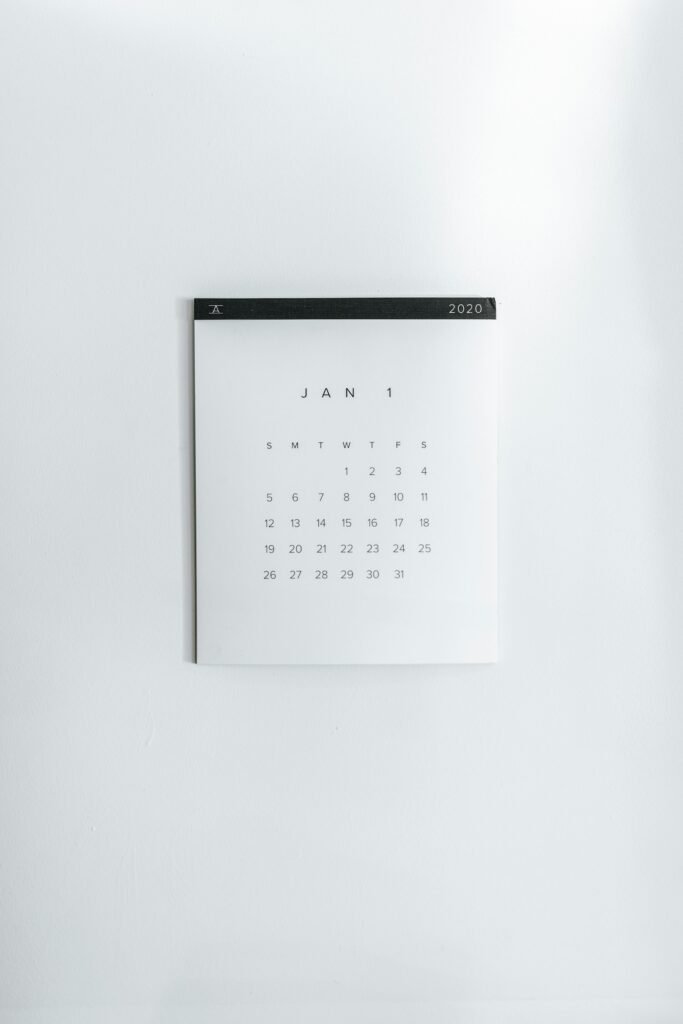
A wall calendar is a hung, printed month-by-month grid you write on directly, giving you an at-a-glance view of a full month’s dates and commitments without opening a phone or app.
How It Works
Each page or panel shows one month as a grid of days, with space to write appointments, deadlines, or reminders directly on the relevant date. As the month ends, you flip to the next page (for a bound calendar) or replace the sheet (for a single-page format), keeping the visible month current. Because it’s always visible without unlocking a device, a wall calendar works well as a passive reminder system — you see it simply by looking up, rather than needing to actively check an app.
Benefits
- Always visible at a glance without unlocking a phone or opening an app
- Gives a full month’s view rather than a single day or week at a time
- Physically writing commitments down can help some people remember them better than typing
- No battery, sync, or software dependency — it just works as long as it’s current
Types of Wall Calendars
Standard 12-month calendars run one calendar year and need annual replacement. Multi-month formats (16-18 months) give extra runway before needing a new one. Large-format calendars offer more writing space per day for people who note several items daily, while compact formats suit those who only track a few key dates.
Who Needs This?
Anyone who wants a passive, always-visible reminder of upcoming dates — without needing to open an app — benefits from a wall calendar, especially for a home office where the same wall space is viewed daily.
Wall Calendars vs. Magnetic Boards
A wall calendar is purpose-built around a monthly date grid and generally isn’t reusable once a month passes without erasing. A magnetic dry-erase board is a blank, reusable writing surface that could be used to sketch a calendar grid yourself but doesn’t come pre-formatted the way a printed wall calendar does.
Frequently Asked Questions
How do I keep a wall calendar from going stale?
Set a fixed weekly time to update it and a reminder near month-end to flip the page — without a routine, most wall calendars quietly stop getting used.
Should I use a wall calendar alongside a digital one?
Many people do — the wall calendar gives an at-a-glance monthly view without needing to open an app, while a digital calendar handles reminders and scheduling details.
What size wall calendar should I get?
A larger format gives more writing space per day if you note several items daily; a standard size is fine for occasional key dates and deadlines.
How high should I mount a wall calendar?
At a height where the current month is easily readable from your normal seated or standing position, without needing to strain up or down.
How long does a typical wall calendar last?
Standard calendars run one calendar year (12 months), while multi-month formats (16-18 months) give extra time before you need to replace it.
Can a wall calendar double as decor?
Many wall calendars are designed with an aesthetic theme or artwork specifically so they double as a visible wall accent rather than looking purely functional.
Next Steps
Ready to buy one? See our Best Wall Calendars picks for a full comparison of top-rated options.