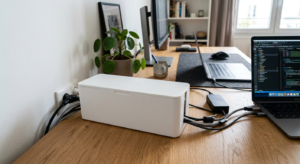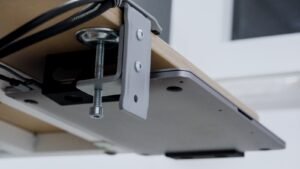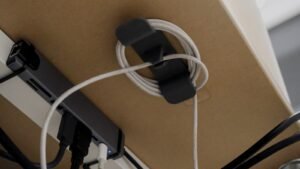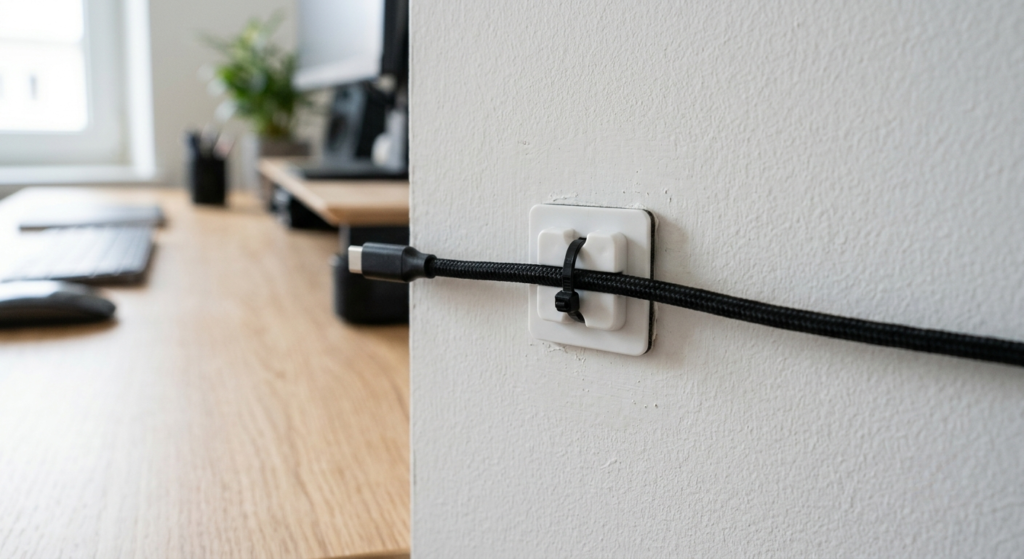
An adhesive cable base sticks to a wall, desk leg, or baseboard, and you thread a zip tie or cable through it to anchor a cord exactly where you want it — no drilling required. It’s the simplest way to route a cable along a fixed path instead of letting it droop or drag across the floor, but the surface it’s sticking to, and whether you’ll ever need to remove it cleanly, matter more than most buyers expect going in.
Key Factors to Consider
Adhesive Strength & Surface Compatibility
Generic 3M-style adhesive holds well on smooth desks, painted metal, and glass, but performs poorly on textured walls, raw wood, or fresh paint. Clean the surface and let the adhesive cure for the manufacturer’s recommended time before loading it.
Zip Tie vs. Open Slot Design
A zip-tie base is more secure but effectively one-time use once you cut the tie to reposition a cable. An open-slot base lets you pop a cable in and out repeatedly without any consumable parts.
Adhesive-Only vs. Adhesive + Screw Hybrid
A screw hole turns a base into a hybrid mount for heavier bundles or rougher surfaces where adhesive alone might eventually let go. Skip the screw if you want a fully removable, no-damage installation.
Base Size & Cable Bundle Capacity
Small bases suit one or two thin cables; a thicker bundle needs a wider base or you’ll be forcing the zip tie or slot past its comfortable capacity.
Removability
Genuine 3M Command products are specifically engineered to remove cleanly without residue or paint damage. Generic adhesive bases are cheaper but more likely to leave a mark or take some paint with them on removal.
Common Mistakes to Avoid
- Sticking to a bad surface. Textured walls, raw wood, and fresh paint all reduce adhesion — a screw-hole hybrid base is the safer bet there.
- Choosing zip-tie when you’ll reposition often. Cutting a zip tie to move a cable means buying replacements — an open-slot base avoids that.
- Skipping the cure time. Loading a base before the adhesive fully cures is the most common cause of early failure.
- Using generic adhesive where removal matters. On a rental or painted wall, genuine Command-brand adhesive removes far more cleanly than generic bases.
Our Recommendations
If you’d rather skip the comparison shopping, these cover the most common situations. For the full lineup with pricing and ratings, see our Best Adhesive Cable Bases guide.
Best Overall: XHF Adhesive Zip Tie Mounts (100-Pack)
The most-reviewed base here by a wide margin at over 9,000 ratings and 4.6 stars, with both zip ties and an optional screw hole included.
Best Discreet / Clear: Attom Tech 50 Clear Cable Clips w/ Screws
A clear finish that blends into light walls, glass, or white desks instead of showing up as black squares, with screws included for stronger holds.
Best Budget / Removable: Command 17017 Cord Clips (4-Pack)
A genuine 3M Command product engineered to remove cleanly without residue, at roughly a dollar per clip.
Frequently Asked Questions
What’s the difference between an adhesive cable base and a cable clip?
They’re largely the same idea marketed differently. “Cable base” often refers to a small square you thread a zip tie through, while “cable clip” often refers to a base with a built-in slot.
Do adhesive cable bases damage walls or desks when removed?
Genuine 3M Command products are designed to remove without residue or paint damage on most surfaces. Generic adhesive bases are more likely to leave a mark, especially on painted drywall.
Can I add a screw to an adhesive cable base for extra strength?
Only if the base has a screw hole built in — not all do. A hybrid adhesive-plus-screw base is worth choosing for a rough surface or a heavier cable bundle.
How many adhesive cable bases do I need for a home office?
Map out your cable run and count every point where it changes direction or needs anchoring. A single desk often needs 4-8 bases; a full office setup with wall runs can need considerably more.
Do adhesive cable bases work on textured walls or painted drywall?
Adhesive holds best on smooth, sealed surfaces. Textured walls, unsealed drywall, and fresh paint all reduce adhesion significantly — a screw-hole hybrid base is a safer bet.
Conclusion
Adhesive cable bases are one of the cheapest, most flexible tools in this whole cluster — a few dollars gets you a fixed anchor point anywhere a cable needs to go. Map your cable run, count your anchor points, and buy a few more bases than you think you’ll need. See our Best Adhesive Cable Bases for a Home Office in 2026 guide for the full lineup.