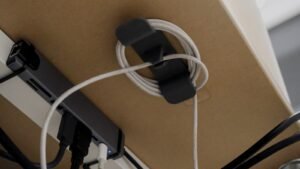
Once you’ve got more than two or three cords running behind a desk, telling them apart by sight stops working — and unplugging the wrong one to troubleshoot a dead monitor gets old fast. The category splits into three real approaches: cheap write-on tags, bulk adhesive sheets, and dedicated label printers, each with a very different cost and durability tradeoff. Picking the right one depends less on the product and more on how many cables you’re labeling and how long you need the label to last.
Key Factors to Consider
Attachment Style: Hook-and-Loop vs. Adhesive vs. Wrap-and-Laminate
Hook-and-loop tags are reusable and leave no residue, but cost more per label. Adhesive labels are the cheapest option but are one-time use once stuck down. Wrap-and-laminate tape from a label maker gives the most durable, permanent result.
Writing Method: Handwritten vs. Printed
Handwriting is faster to start with, but pen ink can fade or smear over months of handling. A printed label, whether from a dedicated label maker or a home printer sheet, stays legible far longer.
Durability & Water Resistance
Labels near a floor, under a desk, or close to a humidifier benefit from a waterproof or laminated finish. Plain paper labels without any coating will eventually smudge or curl.
Label Size & Cable Compatibility
Small hook-and-loop or adhesive tags suit thin charging cables and Ethernet cords. Thicker power cords or bundled cables need a larger label or wider tape to wrap around comfortably without falling off.
Cost Per Label
A bulk adhesive pack can cost pennies per label, while a dedicated label maker has a higher upfront cost offset by cheap refill tape over time. Reusable hook-and-loop tags sit in between and pay off if you relabel cords often.
Common Mistakes to Avoid
- Choosing adhesive for cables you’ll relabel often. One-time-use adhesive labels don’t survive repositioning — reusable hook-and-loop tags do.
- Skipping waterproofing near the floor. Plain paper labels smudge fast in a spot prone to dust, spills, or humidity.
- Buying a label maker for three cables. The upfront cost only pays off at real scale — write-on tags are enough for a typical desk.
- No color system. Labels without a consistent color or naming rule become just as confusing as no labels once you have more than a handful.
Our Recommendations
If you’d rather skip the comparison shopping, these cover the most common situations. For the full lineup with pricing and ratings, see our Best Cable Labels guide.
Best Overall: Wrap-It Storage Cable Labels (30-Pack)
The most-reviewed cable label here, with a hook-and-loop closure that’s reusable and leaves no adhesive residue — 7,100+ ratings at 4.6 stars.
Best Value / Bulk: 270 PCS Waterproof Adhesive Labels
At roughly 2 cents per label, the cheapest way to label every cord in the house, with 9 color options and a laser-printer-compatible sheet.
Best for Printed Labels: NIIMBOT D110 Label Maker Machine
A standalone Bluetooth label printer for crisp, permanent labels typed from your phone — 6,300+ ratings at 4.6 stars.
Frequently Asked Questions
What’s the best way to label cables so they don’t fade or smear?
Use a waterproof or laminated label rather than plain paper, and avoid placing handwritten labels somewhere they’ll be handled often. A dedicated label maker’s printed text holds up longest.
Do I need a label maker, or are write-on tags good enough?
Write-on hook-and-loop or adhesive tags are enough for most home offices with a handful of cables. A label maker makes sense for dozens of cords or a permanent professional look.
How do I organize a color-coding system for cable labels?
Pick a simple rule and stick to it, for example one color per device type or per priority level. A multi-color pack makes this easier to start than buying single-color sets separately.
Are cable labels reusable, or one-time use?
Hook-and-loop tags are reusable and can be moved to a different cable later. Adhesive labels are generally one-time use once stuck down.
Cable labels vs. cable ties with tags, what’s the difference?
A cable label wraps around or sticks onto a single cable to identify it. A cable tie with a tag bundles multiple cables together and identifies the whole bundle. Many setups use both.
Conclusion
Cable labels are one of the cheapest fixes in this whole cluster, and they save real frustration the next time you need to unplug the right cord without a guessing game. Pick an attachment style and decide on a color system before you forget which cable is which. See our Best Cable Labels for a Home Office in 2026 guide for the full lineup.