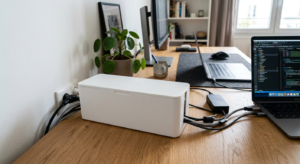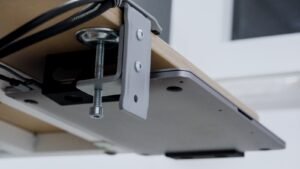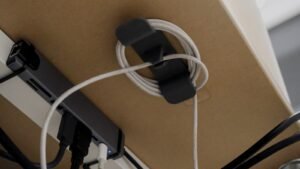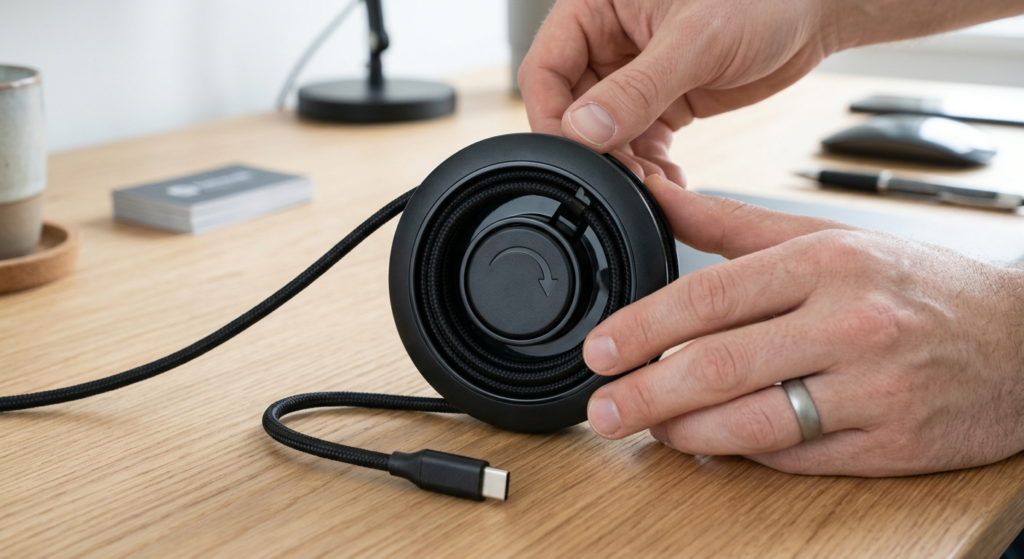
A cable winder takes the extra few feet of slack in a charging cable, HDMI cord, or laptop charger and coils it into a small, tidy bundle instead of a loose loop hanging off the desk. Our research turned up one clear pattern worth knowing before you shop: automatic spring-loaded winders consistently rate 3.0-3.6 stars, well below every manual wrap-style design we compared, because the spring mechanism tends to jam or fail over time.
Key Factors to Consider
Winder Style: Manual Wrap vs. Spring-Loaded Automatic
Manual wrap-style winders have no moving parts to jam or wear out, which our research suggests is why they consistently out-rate automatic spring reels. Automatic winders retract with one motion, but reviewers frequently report the spring mechanism failing over time.
Size & Cable Thickness
Match the winder to your thickest cable, not your thinnest. A winder sized for earbuds won’t close around a laptop charger, and one sized for a laptop charger will look oversized wrapped around a thin USB cable.
Material & Durability
Silicone and TPE flex repeatedly without cracking, which matters if you’re unwinding and re-coiling a cable daily. Rigid plastic winders are cheaper but can snap at the hinge point after months of regular use.
Capacity
Check how much cable length a winder is actually built to hold. Most handle 2-4 feet of slack comfortably; forcing more into one will strain the design and make it harder to close.
Quantity Needed
Count your cables with excess slack before buying a single unit. Multi-packs cost more upfront but work out cheaper per winder than buying single units one at a time.
Common Mistakes to Avoid
- Buying an automatic spring-loaded winder. Our research found these consistently rated 3.0-3.6 stars, with reviewers reporting jamming and spring failure — manual wrap designs rate noticeably higher.
- Sizing to the wrong cable. Match the winder to your thickest cable, or it simply won’t close around it.
- Forcing too much slack into one winder. Overloading a winder beyond its rated capacity strains the design and makes it hard to close.
- Buying one at a time. Multi-packs cost less per winder than buying single units as you notice more cords that need one.
Our Recommendations
If you’d rather skip the comparison shopping, these cover the most common situations. For the full lineup with pricing and ratings, see our Best Cable Winders guide.
Best Overall: Bobino Cord Wrap, Large (3-Pack)
A simple silicone wrap with no moving parts to jam, carrying the highest rating in this list at 4.7 stars; the 3-pack covers more than one cable.
Best for Earbuds / Most-Reviewed: ELFRhino Silicone Earphone Organizer
By far the most-reviewed winder here at over 5,300 ratings, sized for earbud cables and other very thin cords, flat and pocket-friendly.
Best Multi-Pack: CABLETTO Cord Wrap Keeper (6-Pack)
Ships six winders per order — double the Bobino 3-packs — with flexible slots that adjust to different cable thicknesses.
Frequently Asked Questions
What’s the difference between a cable winder and a cable clip?
A clip anchors a cable at a fixed point along a desk or wall. A winder coils up extra slack in the cable itself, so the cable stays shorter and tidier no matter where it’s routed.
Do automatic spring-loaded cord winders actually work well?
Based on our research, not especially — the automatic spring-loaded winders we checked all rated between 3.0 and 3.6 stars, with reviewers commonly reporting the spring mechanism jamming or wearing out.
What size cable winder do I need for a laptop charger?
Most laptop chargers need a large-size winder to comfortably coil the cable between the brick and the wall plug. A medium or small size will be too tight.
Can a cable winder damage a cable over time?
A properly sized winder shouldn’t damage a cable; the risk comes from forcing a cable that’s too thick into a winder that’s too small, which can stress the insulation at the bend point.
Cable winder vs. cable tie, which is better for excess cord length?
A winder is reusable and lets you adjust the coiled length in seconds without cutting or tying anything. A cable tie is cheaper and more permanent, better suited to a cable you rarely need to lengthen again.
Conclusion
A cable winder solves a small but constant annoyance: the extra loop of cord that never has a home. Sizing matters more than brand here — match the winder to your thickest cable and skip the automatic spring-loaded designs our research found reviewers trust the least. See our Best Cable Winders for a Home Office in 2026 guide for the full lineup.